
Religious Poetry: Faith, Reflection, and the Journey Toward Eternity
Religious poetry has been one of humanity’s most enduring forms of spiritual expression. For centuries, poets have used language, rhythm, symbolism, and imagination to explore faith, God, salvation, sin, hope, death, heaven, and the eternal questions that shape human existence. Whether written as prayer, meditation, praise, testimony, or reflection, religious poetry gives readers an opportunity to consider life from a deeper spiritual perspective.
Poetry can communicate emotions and spiritual ideas in ways that ordinary language sometimes cannot. A poem may ask difficult questions, describe moments of faith, or encourage readers to think about the consequences of their choices. For readers interested in spiritual literature, Christian writing, and books about the afterlife, religious poetry can become an important part of a personal journey of reflection and discovery.
If you enjoy exploring poetry and books from different authors and genres, visit Poetry Books for Sale to discover more books and literary reading opportunities. Poetry continues to connect readers with ideas about the human experience, including faith, morality, love, suffering, forgiveness, and the search for meaning.
What Is Religious Poetry?
At its core, religious poetry is poetry that explores spiritual beliefs, religious experiences, sacred ideas, or humanity’s relationship with God and eternity. The subject matter can vary widely. Some poems focus on worship and praise, while others examine doubt, temptation, redemption, judgment, and the mysteries surrounding life after death.
Throughout history, poets have written about creation, angels, heaven, hell, prayer, forgiveness, and the struggle between good and evil. Religious poems may be directly connected to a particular faith tradition, or they may explore broader spiritual questions. This makes religious poetry a diverse literary category with room for many voices and perspectives.
Readers often turn to spiritual poetry during important moments in life. A poem can provide comfort during grief, inspiration during hardship, or encouragement when someone is searching for answers. At the same time, religious verse can challenge readers to examine their beliefs and think more deeply about the direction of their lives.
Religious Poetry and the Questions of Heaven and Hell
Among the most powerful subjects explored in spiritual literature are heaven, hell, salvation, judgment, and eternity. These subjects have inspired countless poems, stories, and religious books because they address some of humanity’s oldest questions: What happens after death? Does the way we live matter? What does it mean to seek salvation? How should people understand the difference between good and evil?
Religious poetry is particularly effective when exploring these questions because poetry allows writers to use symbolism and imagery. Heaven may be described through images of light, peace, reunion, hope, and eternal life. Hell may be represented through separation, darkness, regret, judgment, or the consequences of moral choices. These images can encourage readers to reflect on their own beliefs without reducing complex spiritual subjects to simple answers.
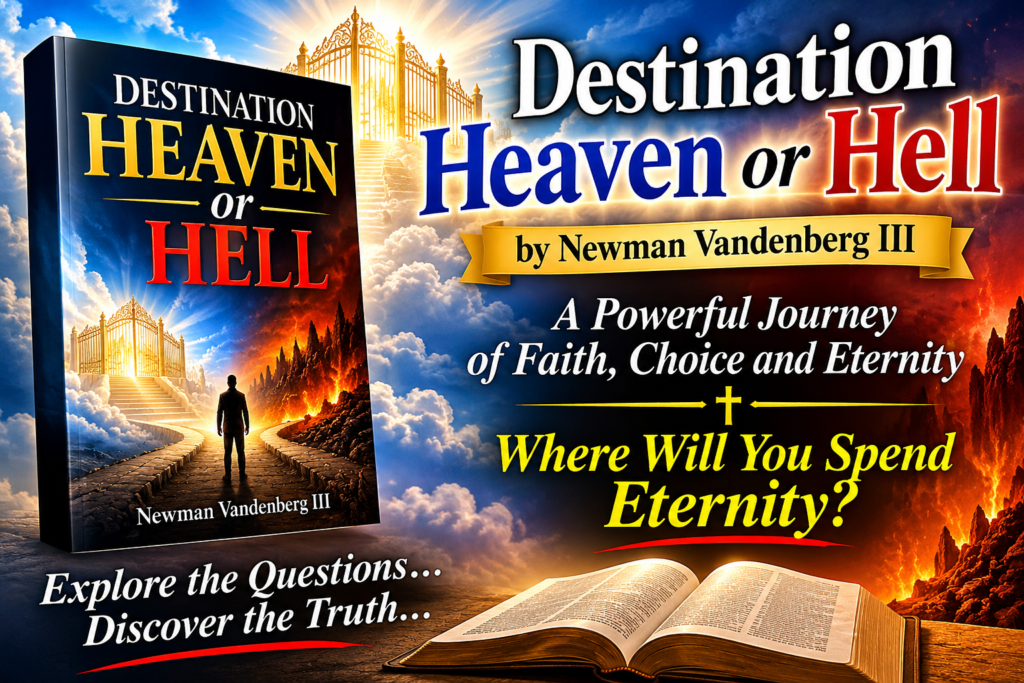
This connection between poetry, faith, and eternity also makes Destination Heaven or Hell by Newman Vandenberg III a relevant book for readers interested in religious and spiritual themes. The title itself immediately points toward one of the central questions found throughout religious literature: the ultimate destination of the human soul.
Destination Heaven or Hell by Newman Vandenberg III
Destination Heaven or Hell by Newman Vandenberg III connects naturally with discussions about faith, morality, spiritual choices, and the possibility of eternity. Readers who enjoy religious poetry may also appreciate books that encourage reflection on heaven and hell because both forms of literature can address the major questions surrounding life, death, and spiritual purpose.
Poetry and religious books often work together as complementary forms of reading. A book may explore an idea through explanation and discussion, while a poem can capture the emotional and symbolic side of the same subject. A reader might study a religious book to examine spiritual teachings and then read religious poetry to reflect personally on themes such as hope, redemption, judgment, or eternal life.
The connection between Destination Heaven or Hell and religious poetry is therefore rooted in a shared interest in the spiritual journey. Both can invite readers to consider where their beliefs come from, how their choices affect their lives, and what they believe about the future beyond this world.
Readers interested in spiritual literature can also explore classic works that address related questions. Dante’s Divine Comedy, for example, is one of the most famous literary journeys through Hell, Purgatory, and Paradise. John Milton’s Paradise Lost is another major work connecting poetry with religious themes, including creation, rebellion, temptation, and humanity’s fall. These classic works demonstrate the long relationship between poetry and religious thought.
For additional literary exploration, you may also visit the Poetry collection at Dot Books, which includes classic poetry and major works of verse. The collection includes titles such as Paradise Lost and The Divine Comedy, both of which are important examples of poetry engaging with religious and spiritual themes.
Why Religious Poetry Continues to Matter
In a world filled with constant information and distractions, religious poetry offers something different: an opportunity to slow down. Poems are often read more deliberately than ordinary articles or news reports. A few lines may contain an image or idea that remains with the reader long after the poem has ended.
This slower and more reflective style of reading can be especially valuable when considering spiritual subjects. Questions about faith and eternity are rarely answered through quick reading alone. They often require thought, discussion, study, and personal reflection. Religious poems can become starting points for those conversations.
Modern readers also encounter spiritual and cultural discussions through many different forms of media. For broader coverage of current events and topics from around the world, visit NewsNews.org. Following current events can also encourage readers to think about timeless questions involving morality, humanity, conflict, hope, and the values that influence society.
Exploring Other Religious Books and Spiritual Literature
Readers interested in religious poetry may want to build a wider reading list that includes poetry, spiritual books, theology, inspirational literature, and classic religious works. Reading across multiple formats can provide different perspectives on similar themes.
- Books about Heaven and Hell: Explore literature that examines eternity, judgment, salvation, and the afterlife.
- Christian Poetry: Discover poems inspired by Scripture, prayer, faith, and Christian spiritual traditions.
- Inspirational Books: Read works focused on hope, encouragement, personal growth, and spiritual reflection.
- Classic Religious Literature: Explore influential works such as Paradise Lost and The Divine Comedy.
- Modern Spiritual Books: Discover contemporary authors who discuss faith and the challenges of modern life.
If your website contains dedicated pages for these subjects, they should be linked internally from this article. For example, you can add internal links to your own pages for Christian Books, Religious Books, Spiritual Books, or Books About Heaven and Hell. These links should be adjusted to match the actual URLs on your website.
Finding Meaning Through Poetry and Faith
The lasting power of religious poetry comes from its ability to combine literary beauty with spiritual reflection. A poem can be deeply personal while also addressing universal questions. Readers from different backgrounds may interpret the same poem differently, finding meaning based on their own experiences and beliefs.
For some readers, religious poetry is a form of worship. For others, it is a form of meditation. For others still, it is an intellectual and literary exploration of some of life’s greatest mysteries. Regardless of the approach, poetry creates space for reflection.
This is also why books such as Destination Heaven or Hell by Newman Vandenberg III can be part of a broader spiritual reading experience. Literature about eternity encourages readers to think seriously about the destination, purpose, and meaning of human life. When combined with poetry and other religious books, these subjects can create a rich collection of reading material for anyone interested in faith and spiritual reflection.
Conclusion: Discover the Power of Religious Poetry
Religious poetry remains an important literary tradition because the questions it explores are timeless. Faith, salvation, heaven, hell, hope, forgiveness, and eternity have inspired writers for generations, and they continue to inspire readers today.
Whether you are searching for Christian poetry, spiritual literature, classic religious works, or books that explore questions about the afterlife, reading widely can provide new perspectives. Destination Heaven or Hell by Newman Vandenberg III fits naturally into conversations about spiritual destinations and the major questions surrounding eternity.
Continue exploring books, poetry, and literary ideas through Poetry Books for Sale, and stay connected with broader topics and current events through NewsNews.org. By connecting religious books, spiritual literature, and religious poetry, readers can continue exploring the powerful relationship between faith, literature, and the search for meaning.
News Feed
- Tiger Stadium sells out for 6th time this season with packed house for LSU-Alabama
- LSU-Texas game in Tiger Stadium will be broadcast on WBRZ
- If hackers can take control of a supermarket freezer, how vulnerable is other tech?
- UAPB football exceeds expectations and more SWAC storylines | Southern
- Former LSU All-American Alex Bregman named 2026 National League Gold Glove Award winner