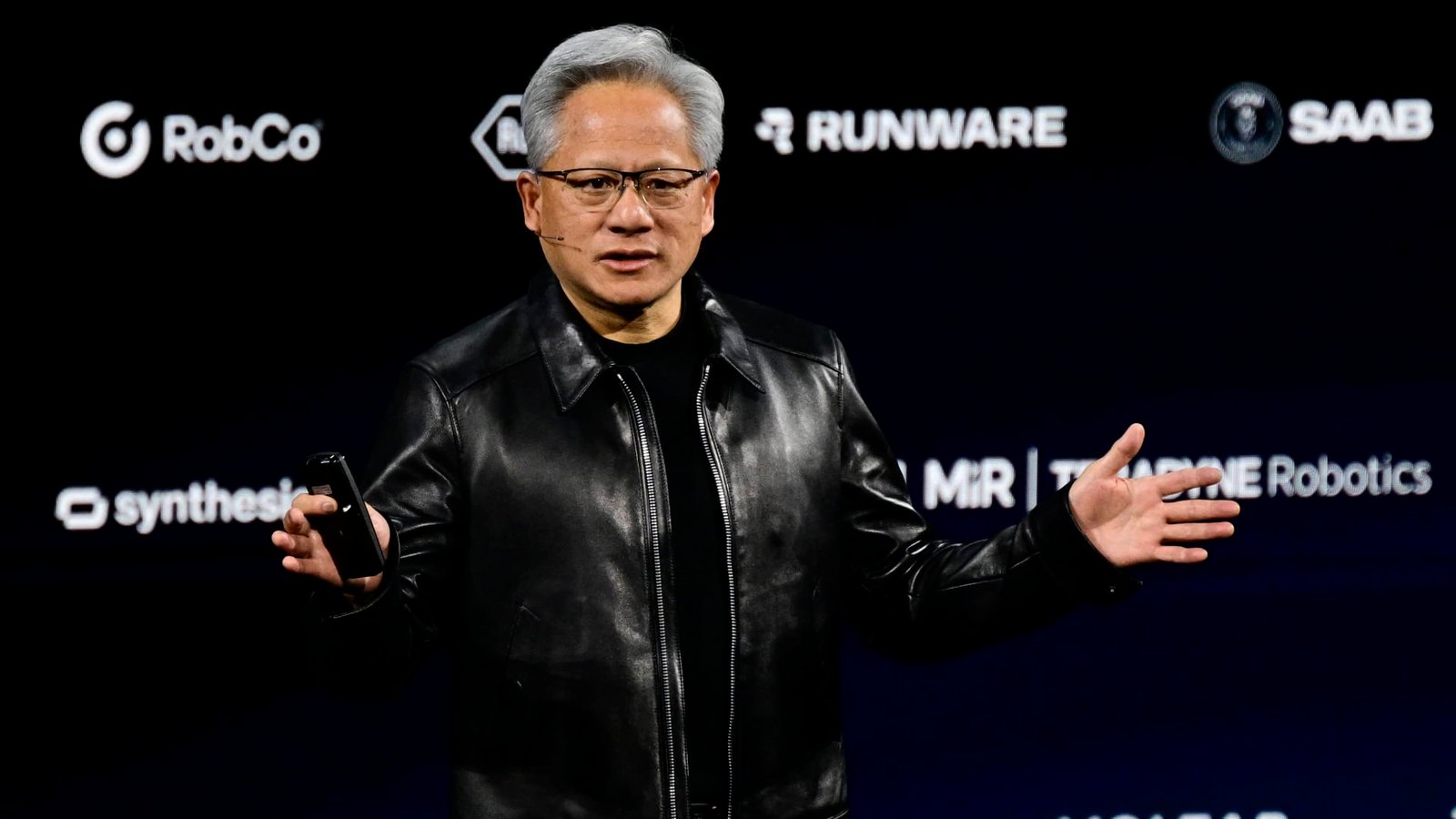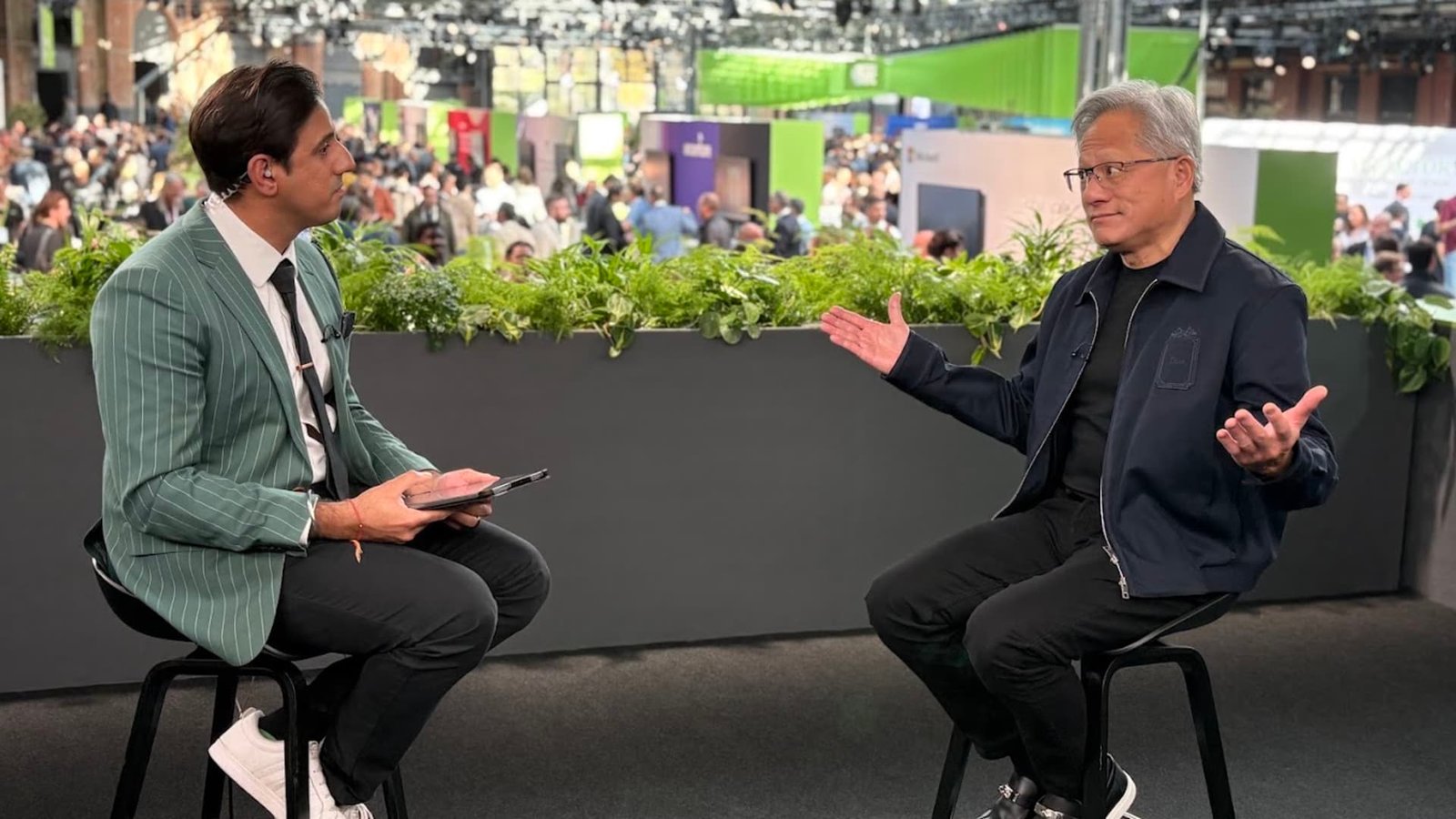
CNBC’s Arjun Kharpal interviewing former Nvidia CEO Jensen Huang at the company’s GTC event in Berlin, Germany on Oct. 22, 2026.
Mike Green | CNBC
I was the last person at CNBC to do a live broadcast interview with Jensen Huang.
At the time, Huang still seemed untouchable. But weeks later, Nvidia is confronting a question investors hadn’t had to confront in more than 30 years: What does the company look like without him?
I sat down with the company founder on Oct. 22 at Nvidia‘s GTC event in Berlin, Germany, just weeks before he admitted to an affair with a woman that U.S. intelligence alleges could be a spy for China.
“Jensenmania,” as I like to call it — which had come to characterize the CEO’s appearances — was in full force at the Berlin event. The Nvidia merchandise store featured clothing with Huang’s face on it, huge cheers erupted when he appeared on stage, and attendees were doing their best to secure a picture with the Nvidia founder.
Huang had somewhat of a rockstar persona with a fandom to match in every city he visited around the world. In 2025, I followed Huang around on his visit to Europe. At an event in London, an attendee who was eagerly waiting to catch a glimpse of Huang compared the Nvidia boss to “Iron Man,” referencing the popular character of the Marvel superhero and tech billionaire inventor Tony Stark.
These moments that I experienced really embodied what Huang had become – a larger-than-life personality who was central to the excitement around artificial intelligence. Less CEO, more AI hype man, evangelical about the technology and its transformative power.
He had the credentials to back it up. Since he co-founded Nvidia in the early 90s, Huang helped shape the company from a startup taking on incumbents to a dominant player for AI chips. Over the last three decades, he saw the shifts coming, investing to turn what were initially chips designed for rendering gaming graphics – GPUs – into general-purpose AI computing semiconductors, along with the software that gave Nvidia its strong position.
Huang’s AI vision
The near 500% rally in Nvidia’s shares over the past five years has been driven by its incredible growth, but also the backing of Huang’s vision.
“Nvidia without Jensen is something which we’ve never really considered,” Storm Uru, co-head of the global innovation team at Liontrust Asset Management, which has been invested in Nvidia since 2017, told me.
Now it is a reality. Huang is out and he has left some of the biggest shoes to fill in tech history – without a clear succession plan in place.
But perhaps it’s the right time for someone new, such an operator-type leader. We’ve seen it before at tech giants like Apple or Alphabet, where visionary leaders step down, and new CEOs take over, bringing the businesses to new heights — at least if you look at the share prices. Sure, they may not be the flamboyant founders, but they innovate in other ways.

Nvidia’s roadmap of new products is set for the next few years. The reality is that AI firms and hyperscalers are still yearning for computing power, which is in short supply. Nvidia also remains the gold standard for its AI chips. Yes, there is rising competition, but the market dynamics that have supported Nvidia are not going to disappear overnight. That gives any permanent successor some breathing space.
“While he and the company must respond to his actions, he has already left an indelible mark on Nvidia and it will be successful in many years to come as a result,” Ben Barringer, head of technology research at Quilter Cheviot, told me.
This report is from this week’s The Tech Download newsletter. Like what you see? You can subscribe here.
News edit
One more thing
Jensen Huang’s exit from Nvidia raises serious questions about the future of the AI industry, and not just because of his status as a “singular figure.”
Nvidia’s interconnected status as the “central bank of AI” raises the possibility that trouble inside the chip giant could have wide-reaching implications for the AI boom, my colleague Matt Peterson writes. Nvidia has made, or committed to, hundreds of billions of dollars in investments to firms in the industry, including OpenAI and Intel.
If Nvidia can’t honor its commitments, this circular financing model could spell trouble for AI companies supported by Nvidia and banks that lent money in the AI buildout.
— Caleigh Keating, Digital Rotational Associate
#interviewed #Huang #weeks #Nvidia #faces #world
Source link